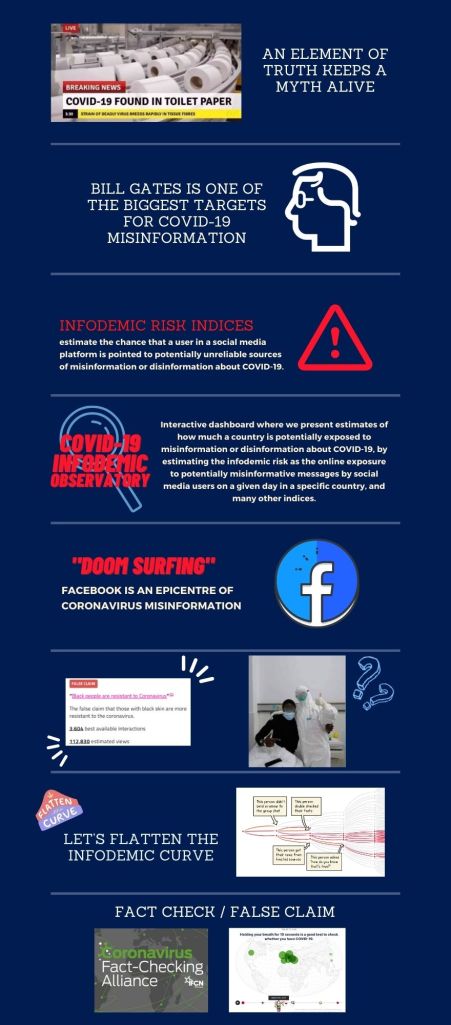
As the COVID-19 pandemics spread across the globe, the World Health Organization (WHO) warned that “we’re not just fighting an epidemic; we’re fighting an infodemic”. It cautioned, “Fake news spreads faster and more easily than the virus, and it is just as dangerous”.
Social media play a strong role in propagating misinformation because of peer-to-peer transmission. There is also evidence that social media is manipulated and used to spread COVID-19 misinformation.
The social media monitoring is important for the PR professionals. They need to understand the role that the social media play in the alarming issue of the Infodemic. This knowledge will help them to better position themselves especially when they develop strategies for the reputation and public Image of their customers. Besides, it might be a critical information for healthcare professionals as well as social media users. Unsurprisingly, the social media activity has increased during the pandemics.
Throughout the unpreceded times of COVID-19 pandemic, many celebrities and influencers invited us through their social media to wear masks, to wash our hands and apply social distancing. Public health campaigns recruited stars with large online followings to use their social media for a good purpose.
TikTok celebrity Charlie D’Amelio posted a social distancing-inspired dance, which went viral. Kim Kardashian set up a Zoom call with many celebrities and Dr. Fauci to ask questions that could inform their followers.
Governments and health authorities such as the World Health Organization and the UK NHS have counted on the help of influencers to manage the information landscape.
The Finnish government classified influencers as “critical actors” during the pandemic – alongside “doctors, bus drivers and grocery workers” – as they have been designated to “disseminate information on social media” to make up for the fact that “government communication doesn’t reach everyone” (Heikkilä, 2020).
The UK government has hired influencers to “help spread accurate health information” especially among younger audiences who “may be more susceptible to fake information” (Pritchard, 2020).
US Surgeon General Jerome Adams directly invited Kylie Jenner to encourage people to take the pandemic guidelines from health authorities seriously. The star responded posting an Instagram Story sent to her 166 million followers.
Governments and health authorities face the challenges of COVID-19 vaccination, skepticism and hesitancy. Influencers could help promote positive, accurate vaccination content to the public. Their mission is to convince as many people as possible to get vaccinated.
Tarik Jašarević, a WHO spokesperson stated “Influencers can be very helpful in spreading awareness about benefits of vaccines and advocating for vaccine acceptance”, “WHO is working on a comprehensive campaign on immunization and Covid-19 vaccines for 2021.” The spokesperson commented that the value of the influencers depends on the audience.
The vaccine campaigns using celebrities should aim “to create a memorable, shareable, and engaging message that also explains the science of the vaccine and addresses concerns people hold, like how quickly it was developed” said Timothy Caulfield, a health policy professor at the University of Alberta in Canada. The campaign strategies aim to connect with people of different age groups and ethnicities in social communities like Twitter, Facebook, and TikTok.
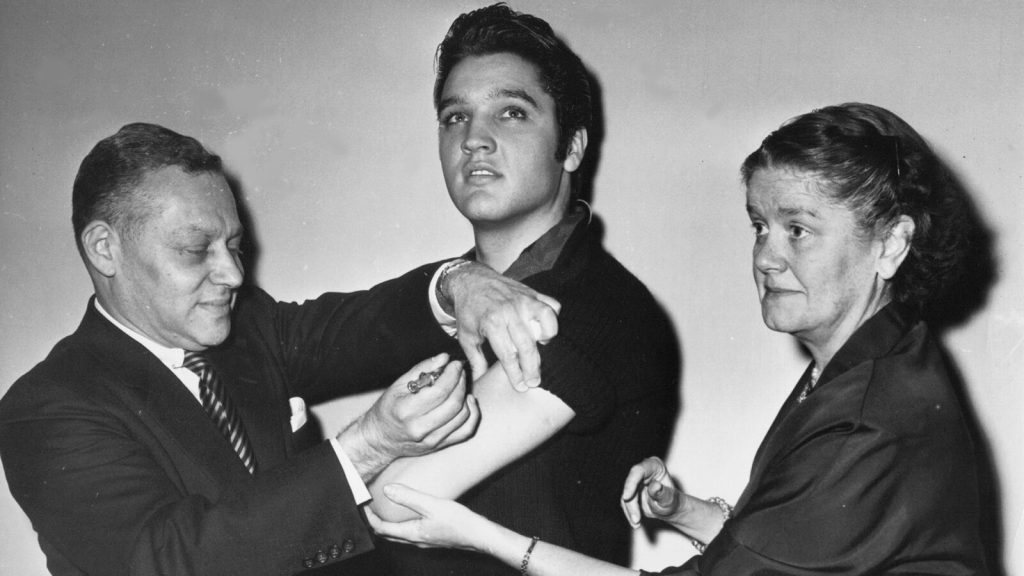
The fact that celebrities and influencers could play a role in promoting a Covid-19 vaccination isn’t something innovative. The King of Rock ‘n’ Roll’, Elvis Presley took the polio vaccine on the popular “The Ed Sullivan Show”. An action aimed to mobilize young people to do the same.
NHS recruited “sensible” celebrities and “influencers” with huge social media followings to support the vaccination program in UK, such as the soccer player Marcus Rashford and members of the British royal family.
In the US, celebrities involved in rolling out Covid-19 vaccination. The Ad Council designed a $50 million campaign with the participation of influencers who encourage people to take the vaccine.
The role that celebrities could play in improving public support for Covid-19 vaccines has also raised concerns and ethical considerations: How much can they influence people’s opinions about getting vaccinated, what are the selection criteria, is it ethical for a celebrity to redeem its endorsement by jumping the line to get a vaccine, is it a dangerous practice if celebrity endorsement contracted by the government and not when personally volunteering to promote a cause?
Influencers and celebrities that encourage their fans to get vaccinated will inevitably expose themselves to misinformation and online attacks from the anti-vaccine movement.
As Caufield implies “it’s going to be harder to have an Elvis Presley moment with COVID”.
References
Abidin C. (2021). Influencers and COVID-19: reviewing key issues in press coverage across Australia, China, Japan, and South Korea. Media International Australia. Vol. 178(1) 114 –135
Gupta Y., Agarwal S., Singh P. (2020). Examining the role of Celebrity on social media during Covid-19 outbreak. Journal of Xi’an University of Architecture & Technology. Volume XII, Issue VII, 2020
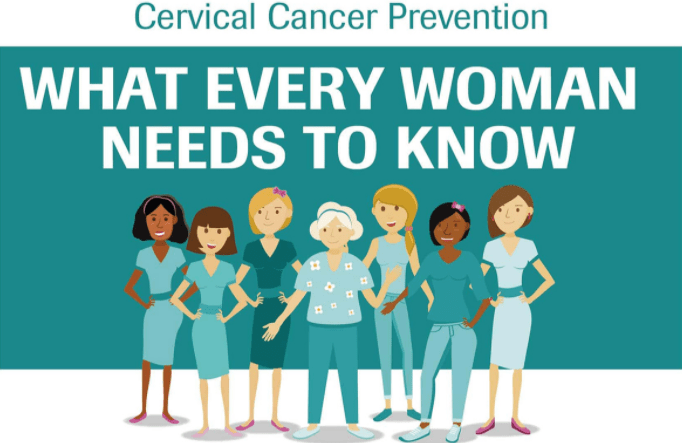
Cervical cancer is the fourth most frequently diagnosed cancer and the fourth leading cause of cancer death in women, with an estimated 604,000 new cases and 342,000 deaths worldwide in 2020. The disease causes an unjustified economic, societal and humanistic burden to the patients, their families and the healthcare system.
However, cervical cancer is preventable 100%. According to the WHO Cervical Cancer Elimination Initiative the disease can be eliminated within a generation through a holistic approach, which includes vaccination, screening and treatment. 74 million cases of cervical cancer and 62 million deaths from cervical cancer can be averted over the next century.
“Cervical cancer shares with neglected tropical diseases: both accompany poverty; strike populations mostly overlooked by policymakers; are associated with stigma and discrimination; strongly affect female morbidity and mortality; tend to be neglected in clinical research and technological development; and can be controlled, prevented, and conceivably eliminated through currently available solutions that are cheap and effective.” (Drexler, M. (2019).
Cervical cancer is a neglected cancer from media. It is not included. It is the breast cancer that has a dominant position and an advantageous treatment from the media.
Researchers agree that the role of the media awareness campaigns is to address issues aiming to increase awareness and knowledge of public health problems.
According to Day (2011) “media awareness campaigns are varied, multifaceted, highly planned and strategically assembled media symphonies designed to increase awareness, inform, or change behavior in target audiences”.
Social media is a ground for interventions to reach the public which may not be feasible through the traditional media. The power of social media is the ability to connect and share information with anyone on the globe, at any time. The effective dissemination of information through social media and its anticipated can lead to change of behavior. I was interested to see how a powerful digital media like “YouTube” videos have been used in the limited number of cervical cancer awareness campaigns.
Through my search in YouTube, I spotted a few relevant video.
I have identified different creative approaches, which focus on several dimensions of the disease.
The PR professionals use factional and/or emotional narratives, trying to address the myths and the perception of cancer. Characteristic themes are Death, Fear, Pain, Suffering, Loss of control and independence, Helplessness, and Stigma
It is interesting to analyze the role of the experts, the organizations, the celebrities, the influencers and the “non-famous” individuals with cancer in the videos.
I wish the following YouTube videos provide to you insights & ideas and why not to inspire you to create a digital media campaign for cervical cancer which can increase awareness, inform, or change behavior in target audiences.
I wish the following YouTube videos provide to you insights & ideas and why not to inspire you to create a digital media campaign for cervical cancer which can increase awareness, inform, or change behavior in target audiences.
VIDEOS
Video 1: “Announcing the Cervical Cancer Awareness Campaign – Chance to Change”
Cervical Cancer Awareness Campaign 2020-Zulekha Hospital’s community initiative.
Video 2: Charlene – Cervical Cancer Prevention Campaign (Department of Health) WA Health training
Video 3: Merck – HPV.com Vaccine Commercial ad/
Video 4: “Don’t be swayed by rumours” – HPV vaccine Laura Brennan (25), from Co. Clare talks about her experience of cervical cancer, which for Laura will be a lifelimiting condition. Dr. Cliona Murphy, Consultant Gynaecologist from the Coombe Hospital, gives us some short, sharp facts about Cervical Cancer and the protection HPV Vaccine
Video 5: There Is No Shame in HPV Infection” This video discuss the theme of shame in cervical cancer
Video 6: “Cervical cancer is preventable and treatable: it is time to eliminate it” Launch of the WHO Global Strategy “Accelerate the Elimination of Cervical Cancer”
Video 7: “IF YOU KNOW A SOPHIE” This video discusses themes related to screening, like embarrassment, anxiety and fear, in a comic way.
Video 8: Celebrities help launch charity “Smear for Smear” campaign
Video 9: Don’t Just Sit Cancer Council Victoria 2004
Video 10: Cervical Screening Saves Lives campaign TV Advertisement NHS
Video 11: Cervical Screening Program Australian Government Department of Health. The Australian Government informs the citizens for the implementation of a new way of screening
Video 12: “Cote de Pablo for Inside Knowledge” The testimonial of the PSA Actress Cote de Pablo for her own cervical cancer fear
Video 13: My Story: HPV tried to wreck my life | Danielle Sepulveres” The personal story of Danielle Sepulveres, NYC based freelance writer for women’s health, pop culture and relationships, Author of “The Semi-Scandalous Story of an Ex-Virgin”, HPV #cervivor, and huge baseball fan.
Video 14: ONE LESS Gardasil Commercial
Video 15: Lablink HPV Ads
Video 16: Everyone has HPV a clip from comedian Briana Hansen’s “Articulate Neanderthal” comedy special
Lyson, H. et al. (2019 August).Social media as a tool to promote health awareness: results from an online cervical cancer prevention study. J Cancer Educ.; 34(4): 819–822. doi:10.1007/s13187-018-1379-8
MacArthur, G., et al. (2011). Impact of media reporting of cervical cancer in a UK celebrity on a population-based cervical screening programme. J Med Screen;18:204–209 DOI: 10.1258/jms.2011.01109
Zhanga, J. (2019).Facts or stories? How to use social media for cervical cancer prevention: A multi-method study of the effects of sender type and content type on increased message sharing. Preventive Medicine 126,105751
Breast cancer is the No 1 diagnosed cancer in the world with 2.3 million new cases in 2020. Hard statistics: one woman in the world is diagnosed with breast cancer every 4, 4 minutes.
Early detection in order to improve breast cancer outcome and survival remains the cornerstone of breast cancer control.
Breast cancer awareness campaigns aim to raise awareness on the problem, educate all women 25+ on the importance of early detection. Because of early diagnosis, higher survival rates are expected.
The Breast Cancer Awareness Month, marked in countries across the world every October, helps to increase attention and support for the awareness, early detection and treatment as well as palliative care of the disease.
Breast Cancer Awareness Month has launched large-scale events like Race for the Cure, and Susan G. Komen walks, since 1985. These events have grown during the last years due to the social media. Through social platforms, they reached larger audiences, engaged with them, fundraised globally and created awareness for the breast cancer. The events are becoming viral through the social media of organizations and companies that support the events. The last Sunday of September has become a viral event which spreads the message of early diagnosis and cure of the disease.
How digital media used in some impactful breast cancer awareness campaigns?
The following three emblematic campaigns can give us valuable insights for study.
Check it before it’s removed (2016)
In 2016, the Pink Ribbon Foundation designed a genius social media campaign. It was actually “designed to be deleted”. The idea was to utilize the social media censorship guidelines in order to create awareness on breast cancer. The message of the campaign was “Check it before it’s removed”. 17 women exposed their naked breast on Facebook and Instagram and called all women to do the same before the social media delete the posts. This action symbolizes the threat to lose a breast to cancer such as a post is deleted by the censorship.
Several celebrities and influencers like the singer Cascada and the supermodel Franziska Knuppe, supported the campaign spreading the campaign to a larger outreach.
The buzz of the campaign was was implausible. 29 million people reached the social platforms contributing to a 28% uplift of traffic to their website.
Everyone can help someone (2019)
M&S partnered with Breast Cancer Now initiative to generate a series of videos for their social channels. Every day women who have been affected by breast cancer share their life with the cancer. These emotional videos have attracted significant traction and thousands of views on social media. The content focused to connect with the brand’s core demographic.
The female actors openly shared their emotions, the fear and the stress after being diagnosed with breast cancer and during their journey as patients.
Their stories were presented in M&S stores, as well as on M&S website and social media. The campaign underlined the solidarity of the people. This solidarity can be expressed towards a neighbor or colleague who has been affected by breast cancer or ever bying selected M&S products. M&S donated 25% from each purchase price to fund Breast Cancer Now’s research.
M&S and Breast Cancer Now are collaborating for over 18 years and in 2015. The funds will help the research to find new ways to prevent breast cancer.
Know your lemons (2017)
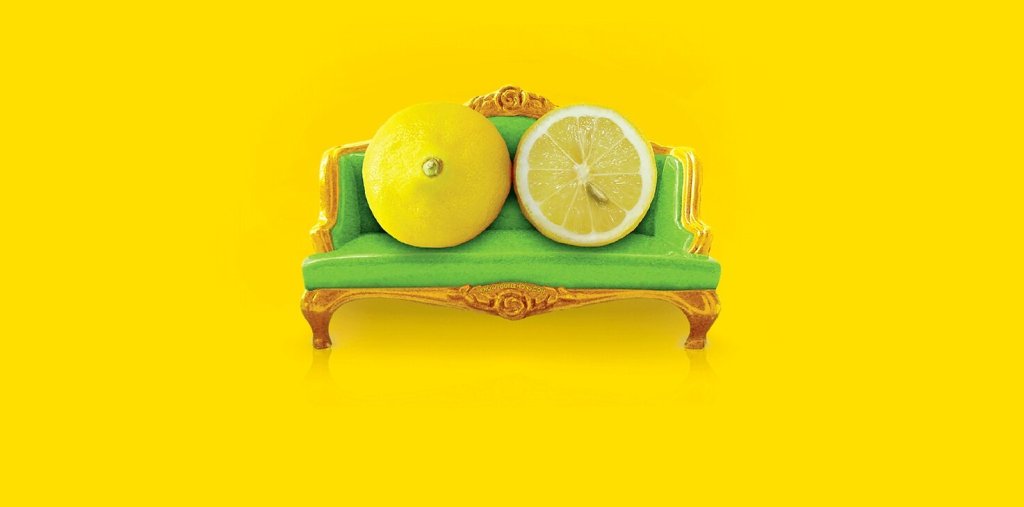
In 2017, the young designer Corrine Beaumont created the groundbreaking ‘Know Your Lemons’ infographic that went viral.
After losing two grandmothers and a friend to breast cancer, she dedicated her time to create infographics and smart graphics that would help women recognize common symptoms of breast cancer.
Her innovative idea was to use images of lemons inside an egg box instead of real breast images. This swap discuss the woman’s anatomy in way that it is not overwhelming for those who may not be like the idea of self-examination.
Moreover, the lemons broaden the image’s reach, as it is displayed in public places than a medically representation. Beaumont clarified “By using a substitute for a breast that’s not connected to the body, such as a lemon, then it makes it possible to do a lot of teaching because it’s a strong metaphor that’s not already used.”
Every year the Know Your Lemons materials are updated and they have been able to gather more insight and feedback from patients, educators and doctors from around the world than ever before.
The #knowyourlemons breast cancer awareness campaign reached over 166 MILLION people around the world, in just 3 weeks.





 Health communication