
Throughout the unpreceded times of COVID-19 pandemic, many celebrities and influencers invited us through their social media to wear masks, to wash our hands and apply social distancing. Public health campaigns recruited stars with large online followings to use their social media for a good purpose.
TikTok celebrity Charlie D’Amelio posted a social distancing-inspired dance, which went viral. Kim Kardashian set up a Zoom call with many celebrities and Dr. Fauci to ask questions that could inform their followers.
Governments and health authorities such as the World Health Organization and the UK NHS have counted on the help of influencers to manage the information landscape.
The Finnish government classified influencers as “critical actors” during the pandemic – alongside “doctors, bus drivers and grocery workers” – as they have been designated to “disseminate information on social media” to make up for the fact that “government communication doesn’t reach everyone” (Heikkilä, 2020).
The UK government has hired influencers to “help spread accurate health information” especially among younger audiences who “may be more susceptible to fake information” (Pritchard, 2020).
US Surgeon General Jerome Adams directly invited Kylie Jenner to encourage people to take the pandemic guidelines from health authorities seriously. The star responded posting an Instagram Story sent to her 166 million followers.
Governments and health authorities face the challenges of COVID-19 vaccination, skepticism and hesitancy. Influencers could help promote positive, accurate vaccination content to the public. Their mission is to convince as many people as possible to get vaccinated.
Tarik Jašarević, a WHO spokesperson stated “Influencers can be very helpful in spreading awareness about benefits of vaccines and advocating for vaccine acceptance”, “WHO is working on a comprehensive campaign on immunization and Covid-19 vaccines for 2021.” The spokesperson commented that the value of the influencers depends on the audience.
The vaccine campaigns using celebrities should aim “to create a memorable, shareable, and engaging message that also explains the science of the vaccine and addresses concerns people hold, like how quickly it was developed” said Timothy Caulfield, a health policy professor at the University of Alberta in Canada. The campaign strategies aim to connect with people of different age groups and ethnicities in social communities like Twitter, Facebook, and TikTok.
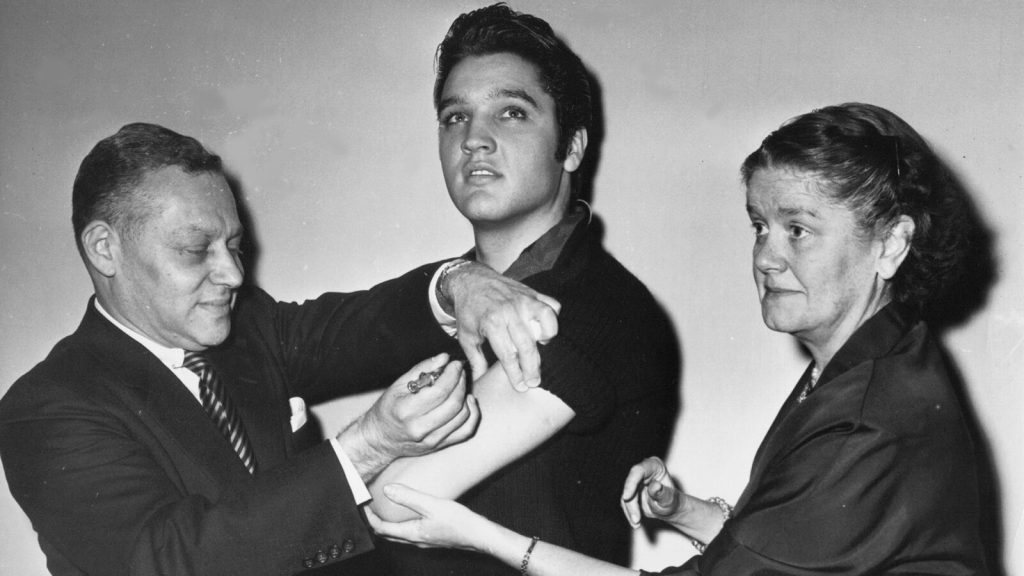
The fact that celebrities and influencers could play a role in promoting a Covid-19 vaccination isn’t something innovative. The King of Rock ‘n’ Roll’, Elvis Presley took the polio vaccine on the popular “The Ed Sullivan Show”. An action aimed to mobilize young people to do the same.
NHS recruited “sensible” celebrities and “influencers” with huge social media followings to support the vaccination program in UK, such as the soccer player Marcus Rashford and members of the British royal family.
In the US, celebrities involved in rolling out Covid-19 vaccination. The Ad Council designed a $50 million campaign with the participation of influencers who encourage people to take the vaccine.
The role that celebrities could play in improving public support for Covid-19 vaccines has also raised concerns and ethical considerations: How much can they influence people’s opinions about getting vaccinated, what are the selection criteria, is it ethical for a celebrity to redeem its endorsement by jumping the line to get a vaccine, is it a dangerous practice if celebrity endorsement contracted by the government and not when personally volunteering to promote a cause?
Influencers and celebrities that encourage their fans to get vaccinated will inevitably expose themselves to misinformation and online attacks from the anti-vaccine movement.
As Caufield implies “it’s going to be harder to have an Elvis Presley moment with COVID”.
References
Abidin C. (2021). Influencers and COVID-19: reviewing key issues in press coverage across Australia, China, Japan, and South Korea. Media International Australia. Vol. 178(1) 114 –135
Gupta Y., Agarwal S., Singh P. (2020). Examining the role of Celebrity on social media during Covid-19 outbreak. Journal of Xi’an University of Architecture & Technology. Volume XII, Issue VII, 2020
https://www.vox.com/recode/22174135/covid-19-vaccine-pfizer-celebrities-influencer-marketing
https://www.statnews.com/2020/12/14/the-polio-vaccine-had-elvis-can-celebrities-similarly-spur-acceptance-of-the-covid-19-vaccine/https://theconversation.com/covid-vaccine-celebrity-endorsements-work-even-if-people-dont-like-it-151130
 Health communication