
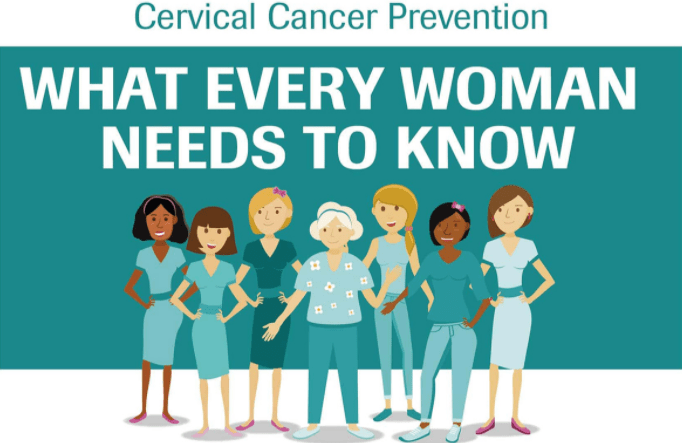
Cervical cancer is the fourth most frequently diagnosed cancer and the fourth leading cause of cancer death in women, with an estimated 604,000 new cases and 342,000 deaths worldwide in 2020. The disease causes an unjustified economic, societal and humanistic burden to the patients, their families and the healthcare system.
However, cervical cancer is preventable 100%. According to the WHO Cervical Cancer Elimination Initiative the disease can be eliminated within a generation through a holistic approach, which includes vaccination, screening and treatment. 74 million cases of cervical cancer and 62 million deaths from cervical cancer can be averted over the next century.
“Cervical cancer shares with neglected tropical diseases: both accompany poverty; strike populations mostly overlooked by policymakers; are associated with stigma and discrimination; strongly affect female morbidity and mortality; tend to be neglected in clinical research and technological development; and can be controlled, prevented, and conceivably eliminated through currently available solutions that are cheap and effective.” (Drexler, M. (2019).
Cervical cancer is a neglected cancer from media. It is not included. It is the breast cancer that has a dominant position and an advantageous treatment from the media.
Researchers agree that the role of the media awareness campaigns is to address issues aiming to increase awareness and knowledge of public health problems.
According to Day (2011) “media awareness campaigns are varied, multifaceted, highly planned and strategically assembled media symphonies designed to increase awareness, inform, or change behavior in target audiences”.
Social media is a ground for interventions to reach the public which may not be feasible through the traditional media. The power of social media is the ability to connect and share information with anyone on the globe, at any time. The effective dissemination of information through social media and its anticipated can lead to change of behavior. I was interested to see how a powerful digital media like “YouTube” videos have been used in the limited number of cervical cancer awareness campaigns.
Through my search in YouTube, I spotted a few relevant video.
I have identified different creative approaches, which focus on several dimensions of the disease.
The PR professionals use factional and/or emotional narratives, trying to address the myths and the perception of cancer. Characteristic themes are Death, Fear, Pain, Suffering, Loss of control and independence, Helplessness, and Stigma
It is interesting to analyze the role of the experts, the organizations, the celebrities, the influencers and the “non-famous” individuals with cancer in the videos.
I wish the following YouTube videos provide to you insights & ideas and why not to inspire you to create a digital media campaign for cervical cancer which can increase awareness, inform, or change behavior in target audiences.
I wish the following YouTube videos provide to you insights & ideas and why not to inspire you to create a digital media campaign for cervical cancer which can increase awareness, inform, or change behavior in target audiences.
VIDEOS
Video 1: “Announcing the Cervical Cancer Awareness Campaign – Chance to Change”
Cervical Cancer Awareness Campaign 2020-Zulekha Hospital’s community initiative.
Video 2: Charlene – Cervical Cancer Prevention Campaign (Department of Health) WA Health training
Video 3: Merck – HPV.com Vaccine Commercial ad/
Video 4: “Don’t be swayed by rumours” – HPV vaccine Laura Brennan (25), from Co. Clare talks about her experience of cervical cancer, which for Laura will be a lifelimiting condition. Dr. Cliona Murphy, Consultant Gynaecologist from the Coombe Hospital, gives us some short, sharp facts about Cervical Cancer and the protection HPV Vaccine
Video 5: There Is No Shame in HPV Infection” This video discuss the theme of shame in cervical cancer
Video 6: “Cervical cancer is preventable and treatable: it is time to eliminate it” Launch of the WHO Global Strategy “Accelerate the Elimination of Cervical Cancer”
Video 7: “IF YOU KNOW A SOPHIE” This video discusses themes related to screening, like embarrassment, anxiety and fear, in a comic way.
Video 8: Celebrities help launch charity “Smear for Smear” campaign
Video 9: Don’t Just Sit Cancer Council Victoria 2004
Video 10: Cervical Screening Saves Lives campaign TV Advertisement NHS
Video 11: Cervical Screening Program Australian Government Department of Health. The Australian Government informs the citizens for the implementation of a new way of screening
Video 12: “Cote de Pablo for Inside Knowledge” The testimonial of the PSA Actress Cote de Pablo for her own cervical cancer fear
Video 13: My Story: HPV tried to wreck my life | Danielle Sepulveres” The personal story of Danielle Sepulveres, NYC based freelance writer for women’s health, pop culture and relationships, Author of “The Semi-Scandalous Story of an Ex-Virgin”, HPV #cervivor, and huge baseball fan.
Video 14: ONE LESS Gardasil Commercial
Video 15: Lablink HPV Ads
Video 16: Everyone has HPV a clip from comedian Briana Hansen’s “Articulate Neanderthal” comedy special
References
Drexler, M. (2019 Fall). The Cancer Miracle Isn’t a Cure. It’s Prevention. HARVARD PUBLIC HEALTH MAGAZINE OF THE HARVARD T.H. CHAN SCHOOL OF PUBLIC HEALTH. Available at: https://www.hsph.harvard.edu/magazine/magazine_article/the-cancer-miracle-isnt-a-cure-its-prevention/
Lyson, H. et al. (2019 August).Social media as a tool to promote health awareness: results from an online cervical cancer prevention study. J Cancer Educ.; 34(4): 819–822. doi:10.1007/s13187-018-1379-8
MacArthur, G., et al. (2011). Impact of media reporting of cervical cancer in a UK celebrity on a population-based cervical screening programme. J Med Screen;18:204–209 DOI: 10.1258/jms.2011.01109
Zhanga, J. (2019).Facts or stories? How to use social media for cervical cancer prevention: A multi-method study of the effects of sender type and content type on increased message sharing. Preventive Medicine 126,105751
CANCER FACT SHEETS: CERVICAL CANCER. Available at: https://gco.iarc.fr/today/data/pdf/fact-sheets/cancers/cancer-fact-sheets-16.pdf
WHO. Cervical cancer. Available at:https://www.who.int/health-topics/cervical-cancer#tab=tab_1
 Health communication